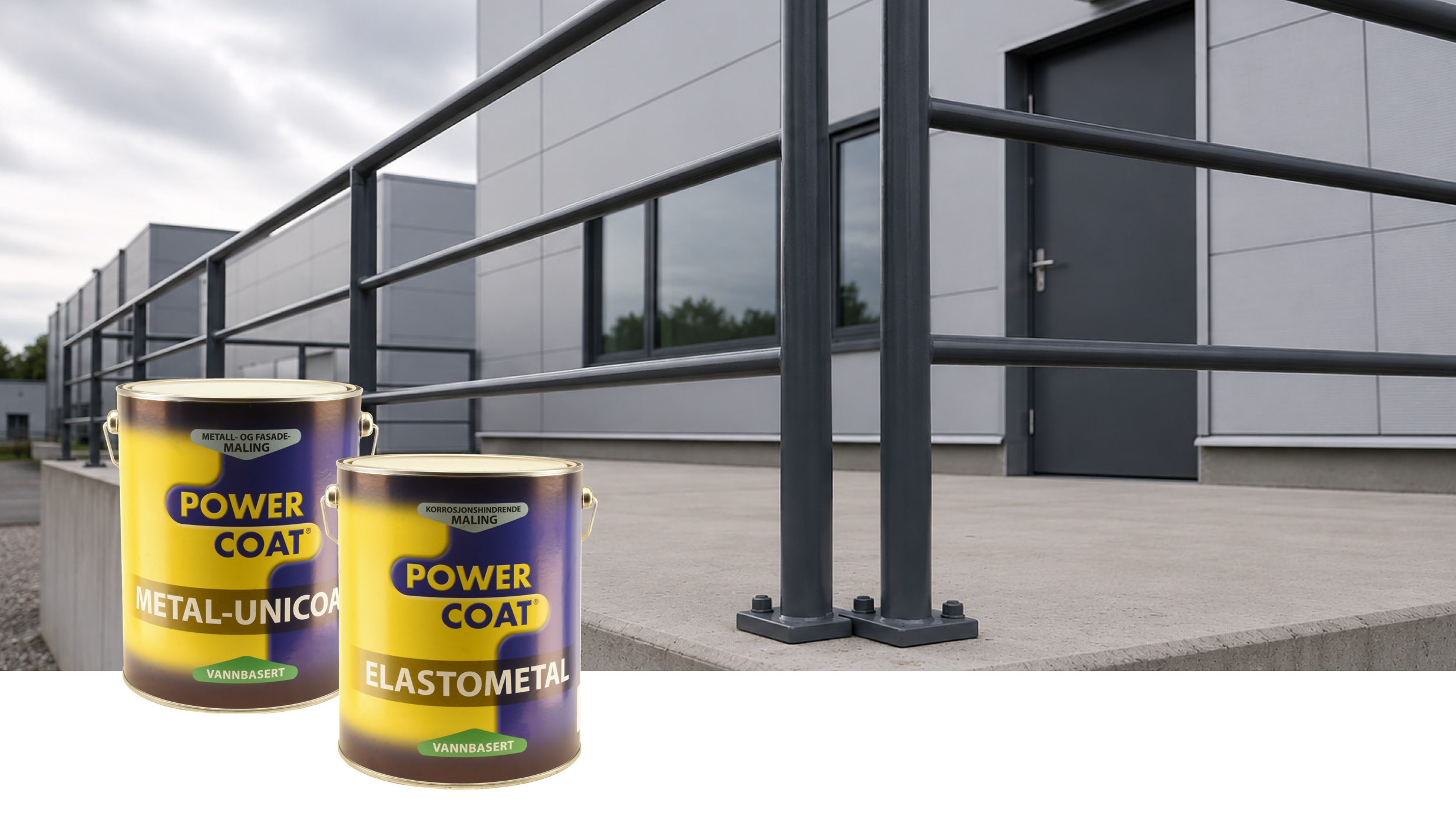
Tørketider Power Coat 3 in 1
Power Coat 3 in 1 er en spesiell maling og har en tørkemekanisme som kan være vanskelig å skjønne.
Temperaturen har liten innvirkning på tørketiden. Det er liten forskjell på tørking i temperaturområder fra 5–20°C, men temperaturer over 35–40°C vil bremse den, selv om det kan virke kontraintuitivt. Det som er avgjørende er lufttilførsel. Utvendig med vind i luften tørker PC 3 in 1 hurtig. To testplater med samme malingstykkelse og ved samme omgivelsestemperatur vil tørke fortere utendørs når det blåser enn innendørs.
Fordelen med 3 in 1 er at den er berøringstørr veldig raskt, og konstruksjoner som ikke skal bearbeides eller transporteres kan herde over tid.
For å oppnå den hurtigste herdetiden i en 3-strøks oppbygging med Power Coat 3 in 1 er det lurt å vente tre døgn mellom strøkene. Da får hvert strøk herde ut og løsemidlene får slippe ut. De færreste har selvfølgelig tid til dette, men lengre tid mellom strøkene i en 2- eller 3-strøks oppbygging er absolutt å anbefale.
For å fremskynde herdetiden ved 3-strøks påføring kan alternativet være å benytte Nitrofest/Vedheftsgrunner som første strøk og tilsette Herdeakselerator i 3 in 1 (Herdeakselerator må ikke brukes i første strøk.). Ved bruk av Herdeakselerator må lufttemperaturen være over 15°C ved påføring for at den skal ha sin virkning.
Power Coat 3 in 1 er
• berøringstørr etter 30 minutter
• overmalbar etter 90 minutter
• brukstørr etter 120 minutter
• fullt herdet etter 3 dager
VOC = Volatile Organic Compounds = Flyktige organiske komponenter
VOC-utslipp er typiske utslipp fra maling. Disse utslippene er godt dokumentert, med informasjon om kvantitet (PC 3 in 1: 390 g/ltr) og type komponenter.
I Power Coat 3 in 1 brukes en blanding av løsemidler som fordamper forholdsvis raskt, og som også har høy oppløselighet. Ved normal filmtykkelse vil over 50% av løsemiddelet være fordampet etter 30 minutter, over 90% etter 2 timer og over 99% etter 8 timer. Selvsagt vil dette i praksis også være avhengig av temperatur, luftmengde etc, og det vil ta lenger tid ved økt filmtykkelse.
Det store diskusjonstemaet for tiden er utslipp i bygninger/værelser/kontorer, bl.a. pga. tepper, teppelim, 2-komponente møbelmalinger, noen typer veggmalinger uten VOC, noen vannbaserte lakk- og beisprodukter, noen typer plastmaterialer (myknere) osv.
Selv løsemiddelfrie 2-komponente malinger kan ha kritiske utslipp fra herdere; det kan være brukt for mye herder, det kan være herder som skal aktiveres av varme, men det er ikke brukt høy nok varme, eller det kan være herdere som aktiveres av UV-lys, men det har ikke vært tilstrekkelig UV-stråling etc. Utslipp fra herdere er langt farligere enn utslipp fra vanlige løsemidler.
Noen vannbaserte malinger har løsemidler som oppløses veldig langsomt (noe som er uten VOC ifølge noen regulativer) – disse fordamper i uker og måneder etter at malingen er påført. Produsenten av Power Coat 3 in 1 har besluttet at det er langt bedre å ha en merkbar lukt under påføring (og kort tid etterpå), sammenlignet med å ha en svak lukt over lang tid.