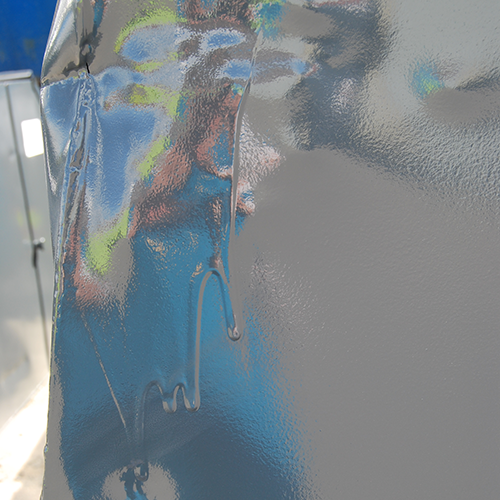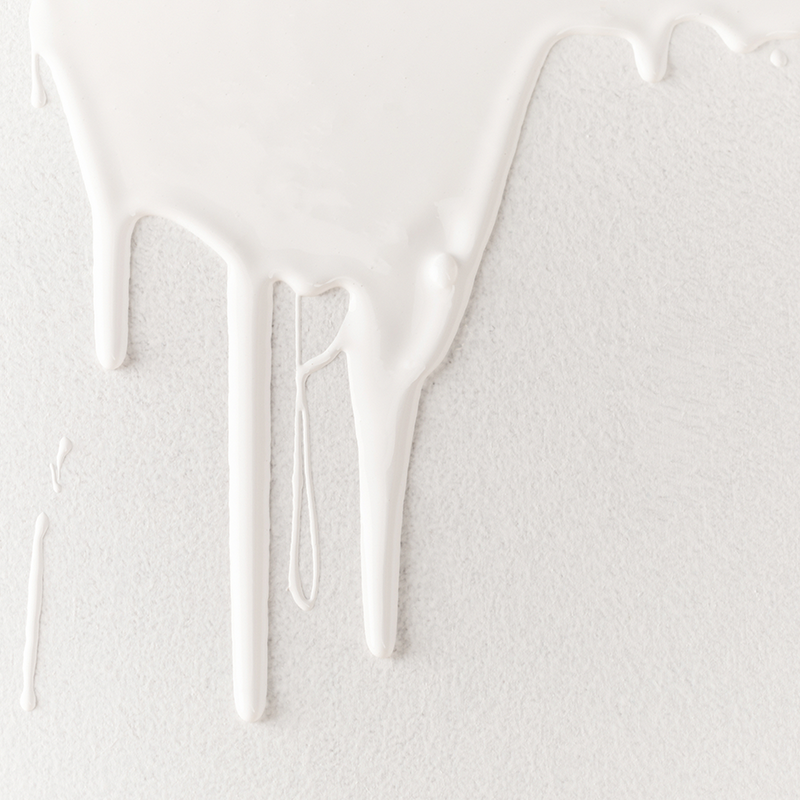
Uansett hvilket underlag du maler, kan du ende opp med maling som siger. Den vanligste årsaken til siging er at man rett og slett har påført for tykke strøk, dvs. tørrfilmtykkelsen var for høy. Strøket rekker ikke å tørke i tide før tyngdekraften slår til. Et annet årsak kan være at det ble tilsatt for mye tynner e.l. som fører til en endring i viskositeten. Påførte du malingen/belegget med en malesprøyte, kan det også ha hendt at du holdt dysen for nær overflaten, slik at strøket ble for tykt (se årsak 1).
Konsekvensen av å ha påført for tykke lag kan være at malingen skinntørker, dvs. det ytterste laget herder før resten av strøket klarer å gi fra seg løsemiddelet. Da stenges løsemiddelgassen inne i malingen og strøket herder ikke før lang tid etterpå. Malingen føles mykt og vedheften er dårlig.
Å rette opp i feilen kan bli vanskelig, da malingsstrøket må slipes ned. Er filmen tykk og myk, blir dette utfordrende.
Så unngå siging ved å påføre strøkene i våtfilmtykkelsen angitt i malingens produktdatablad og verifiser underveis med en våtfilmsmåler. Påfør heller flere strøk enn for tykke.
Har du lyst å lære mer om korrekt påføring av maling, les gjerne vår ABC for maling.