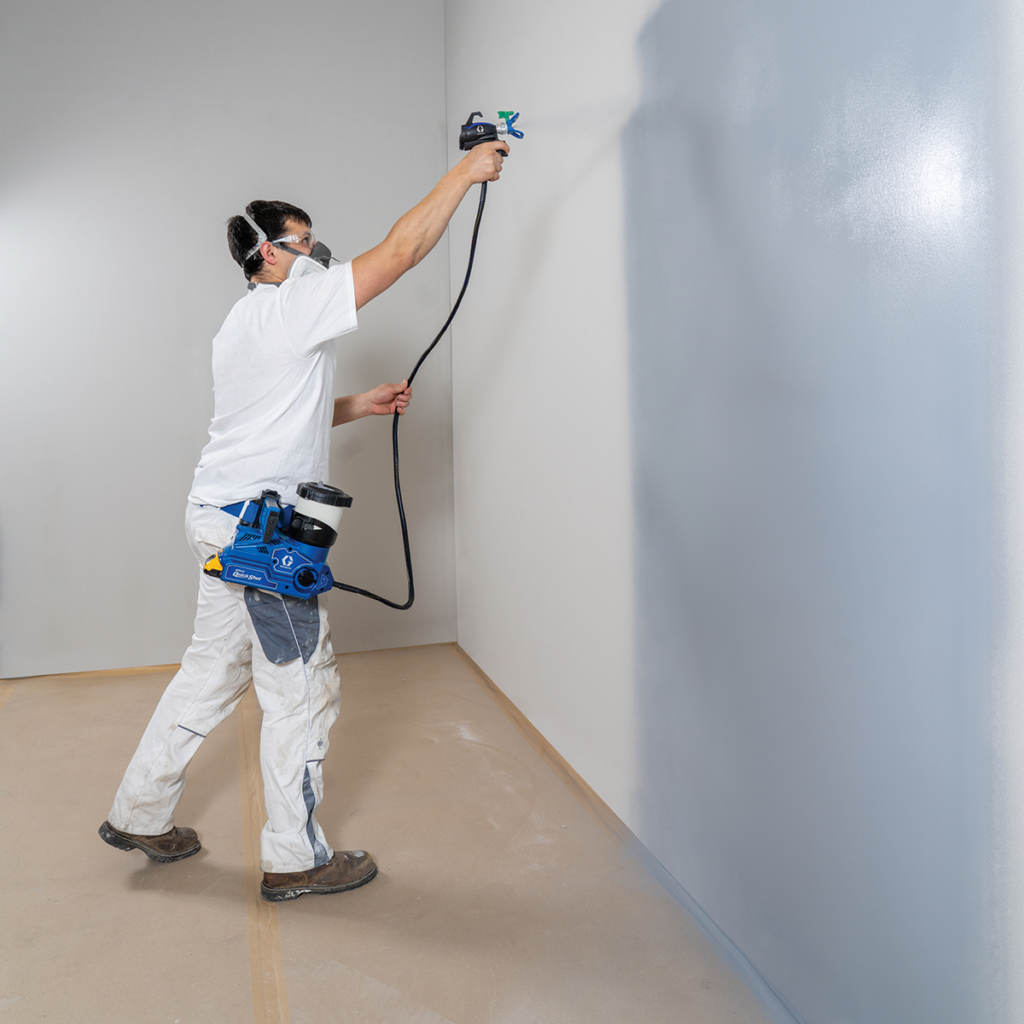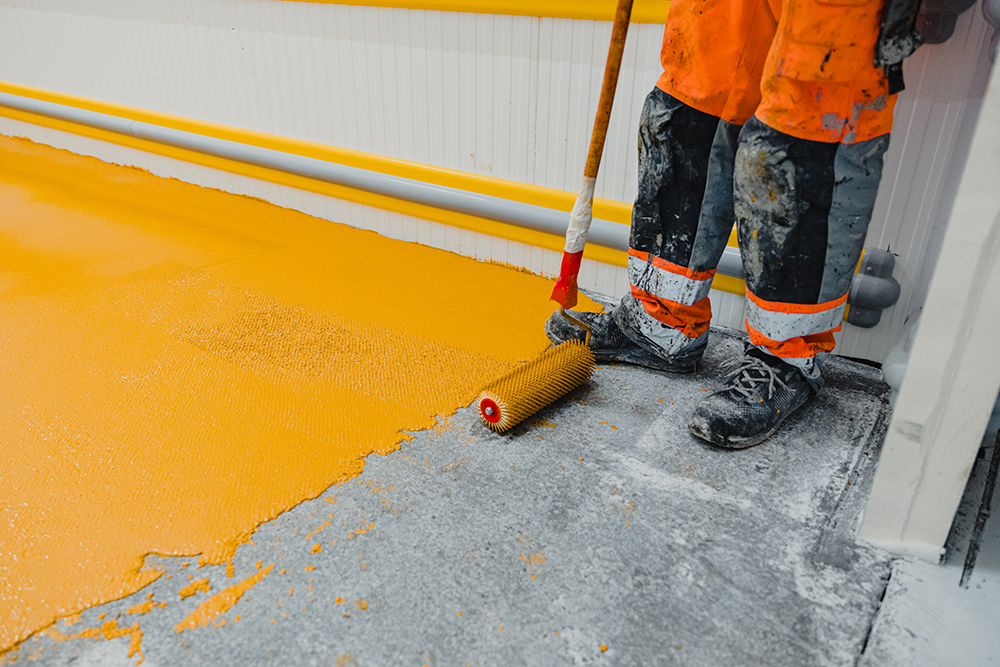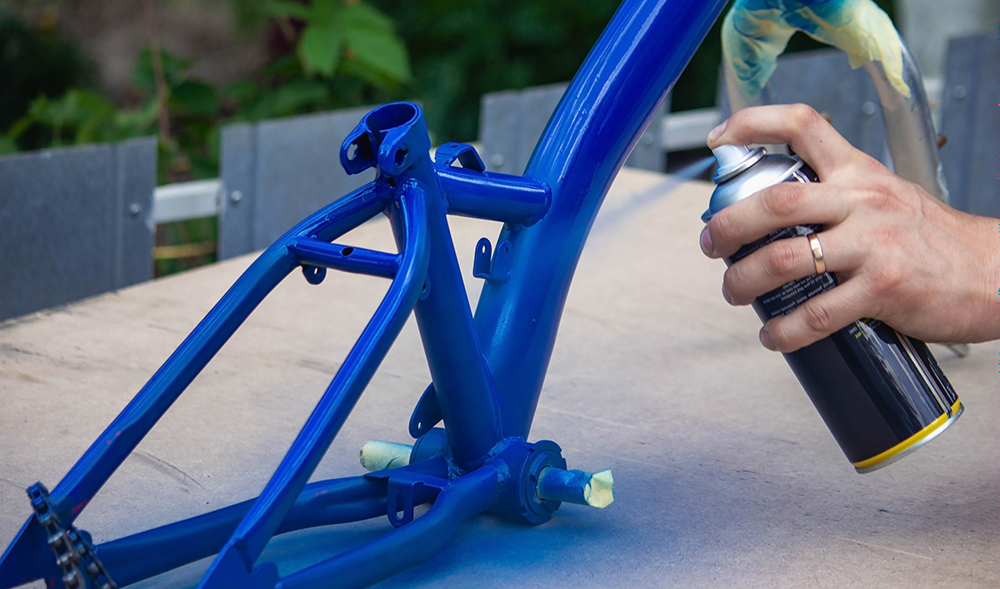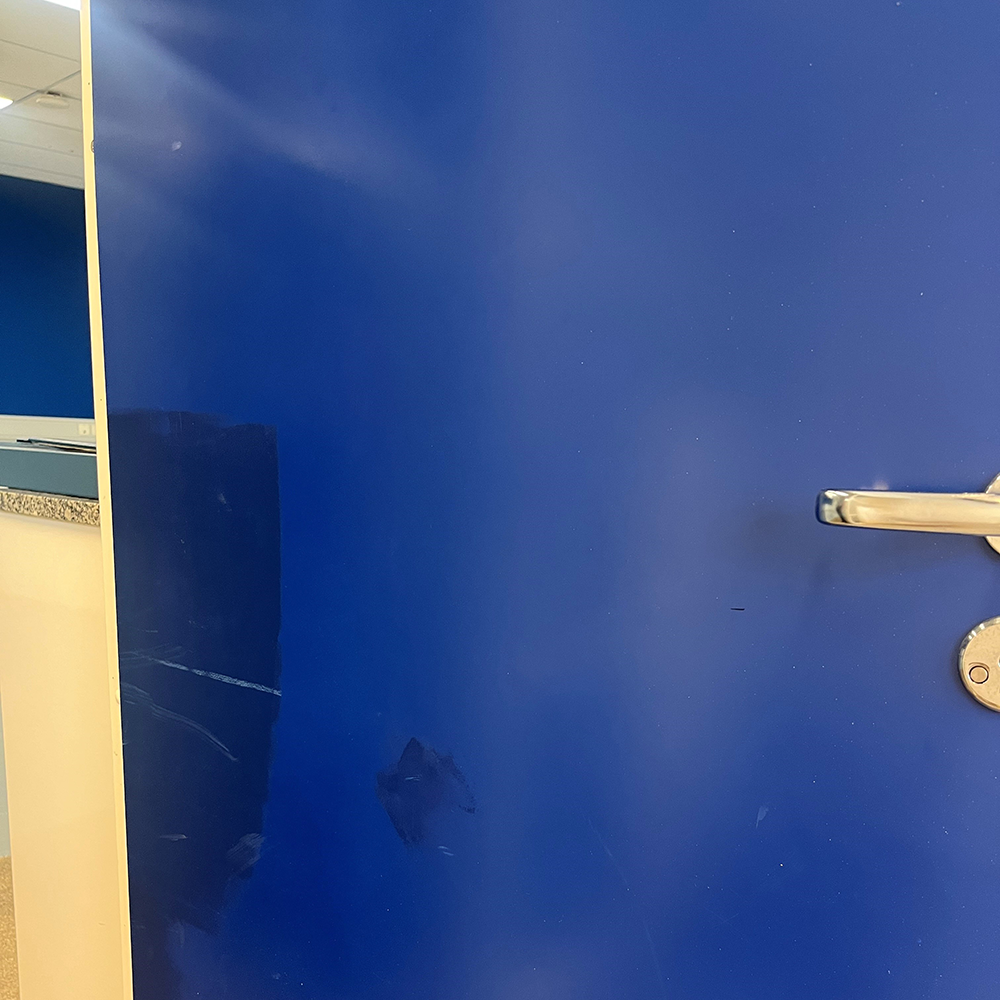
There is no point in applying the most expensive paint if the surface is dirty or the sun is directly on the surface. You don’t need a master’s degree in spray painting to get a great result, but there are some important points you should remember. Even when done correctly, the painting technique has a big impact on the result. See the picture below where the same paint and color have been used. The difference in the surface structure refracts the light in a completely different way. Spraying will always create a much smoother surface than rolling. If you want a fine finish result (regardless of whether high gloss or matt), you should choose a paint that is described as “brush quality”. It dries more slowly and gives the paint time to flow out to a smooth surface without streaks.
Watch the temperature
In order for paint, regardless of type, to adhere 100% to the substrate and last for many years, it is important to understand that the temperature must not be too high. Too high a surface temperature on
the substrate during application is often the cause of poor adhesion. Surface temperatures above + 25°C must be avoided to be on the safe side. Higher temperatures disrupt the drying and curing process of the paint. The paint dries too quickly and does not adhere.
The surface to be painted
Ensure that the surface is sufficiently cleaned before applying the paint. The surface should be free of oil, grease and silicone. There should be no residues of detergents or degreasers. The surface should not have concentrations of chlorides or salts above what the paint system specifies. Always read the technical data sheet for the paint to be applied!
Avoid direct sunlight
Avoid painting in direct sunlight. The surface temperature of steel sheets in direct sunlight at an outdoor temperature of +20°C often reaches +40°C, depending on the color of the surface. The darker the surface, the higher the temperature. So choose a time of day when the object to be painted is in the shade – until the paint has dried a little. Too high temperatures disrupt the drying and curing process of the paint and can cause bubbling, trapped solvent and peeling.
Application and film thickness
High-pressure spraying normally always gives the best result, especially because it is easier to apply the correct film thickness. Both too low and too high film thickness are negative. If high-pressure spraying is not possible, a roller, brush or spray can be used. NOTE: When applying with a roller, it is important to ensure that the correct film thickness is achieved. This is especially important with Power Coat 3 in 1, which has an exceptionally high hiding power. It often seems that you have applied enough, because the paint covers so well. Check regularly with a wet film gauge that you have achieved the desired wet film. Continuously check the film thickness at various points on the surface, especially over sharp edges and weld joints.
Brush
The paint is applied with a regular round, oval or flat brush (industrial quality). For better flow and longer open time, Special Thinner 3 in 1 can be added. A TFT of 40-80µm can be achieved.
Roll
It is recommended to use a short-haired synthetic roller (up to 12 mm), nylon, suitable for two-component paints. For better flow and longer open time, Special Thinner in 3 in 1 can be added. A TFT of 40-60µm can be achieved. Foam rubber rollers should not be used.
It is very important not to apply too little paint. This will cause air bubbles from the roller to be pushed into the paint surface, causing the paint to rise and form lumps. For best results, roll vertically.
Syringe
A TFT from 50µm (small objects, air atomization) to 125µm (larger objects, high pressure) can easily be achieved with a paint sprayer. For more on spray technique and choosing the right nozzle, see Choosing the Right Nozzle .
Spray
Hold the spray can 20-25 cm from the surface, start moving the spray can before application. Do not apply more than 60-80µm TFT per coat.